
Tenant Storage
| Data Storage | Example | Separation Method | Comments |
|---|---|---|---|
| Relational database | MySQL | Schema-per-tenant | |
| NoSQL | DynamoDb, MongoDb, Elasticsearch |
|
|
| Object storage | S3 | Namespace and file-based | Files can also be encrypted uniquely per tenant. |
Tenant Isolation Architecture Models
Tenant Isolation Levels at Rest (from the most strict to the most permissive)
 Separated Databases
-
Each tenant will have a different database for maximum isolation.
-
To enable the application layers to pick up the right database upon the tenant's request, you will need to maintain metadata in a separate store (such as Amazon DynamoDB) where mapping of a tenant to its database is managed.
Separated Tables/Schemas
All tenant's data resides in the same database. The data is tied to different schemas or tables to provide a level of isolation.
Shared Database, Shared Tables/Schemas
Tenant Isolation in Transit
In transit, every request has to have tenant context, unless it serves a cross tenant job. For example, the cross tenant load report.
Data Stores
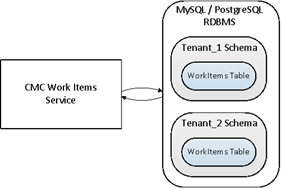
You should maintain a separate schema per tenant on the data store. The service will maintain separate connection pools per tenant, where connection retrieval strictly requires the tenant in the JWT.
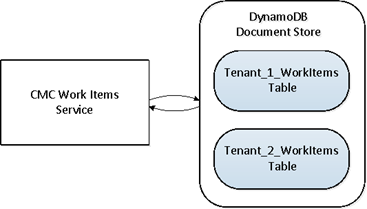
For document stores like DynamoDB, there is not a concept of separate schemas like that in an RDBMS. Instead, you should name-space the tables for each tenant. This ensures a table-level separation and aligns with other AWS constructs.
ACD Data Stores with Logical Separation
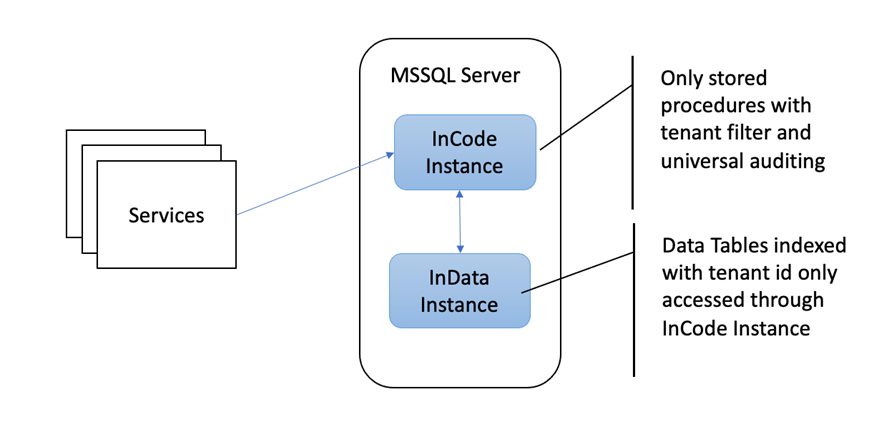
Some databases logically separate tenants by tenant index key. In these databases, services are not allowed to directly access the inData database. The inData database holds the persistent data tables or views. Another database (inCode) is paired with the inData database to do the following:
-
Hide underlying structures.
-
Enforce tenant isolation.
-
Provide audit information for any data operations about the information life cycle.
Services access the inCode database directly. They must provide a